


Money Changer Exchange Rates can vary from one provider to another, even when travelers are exchanging the same currency on the same day. This often raises a simple question: why are the rates not identical?
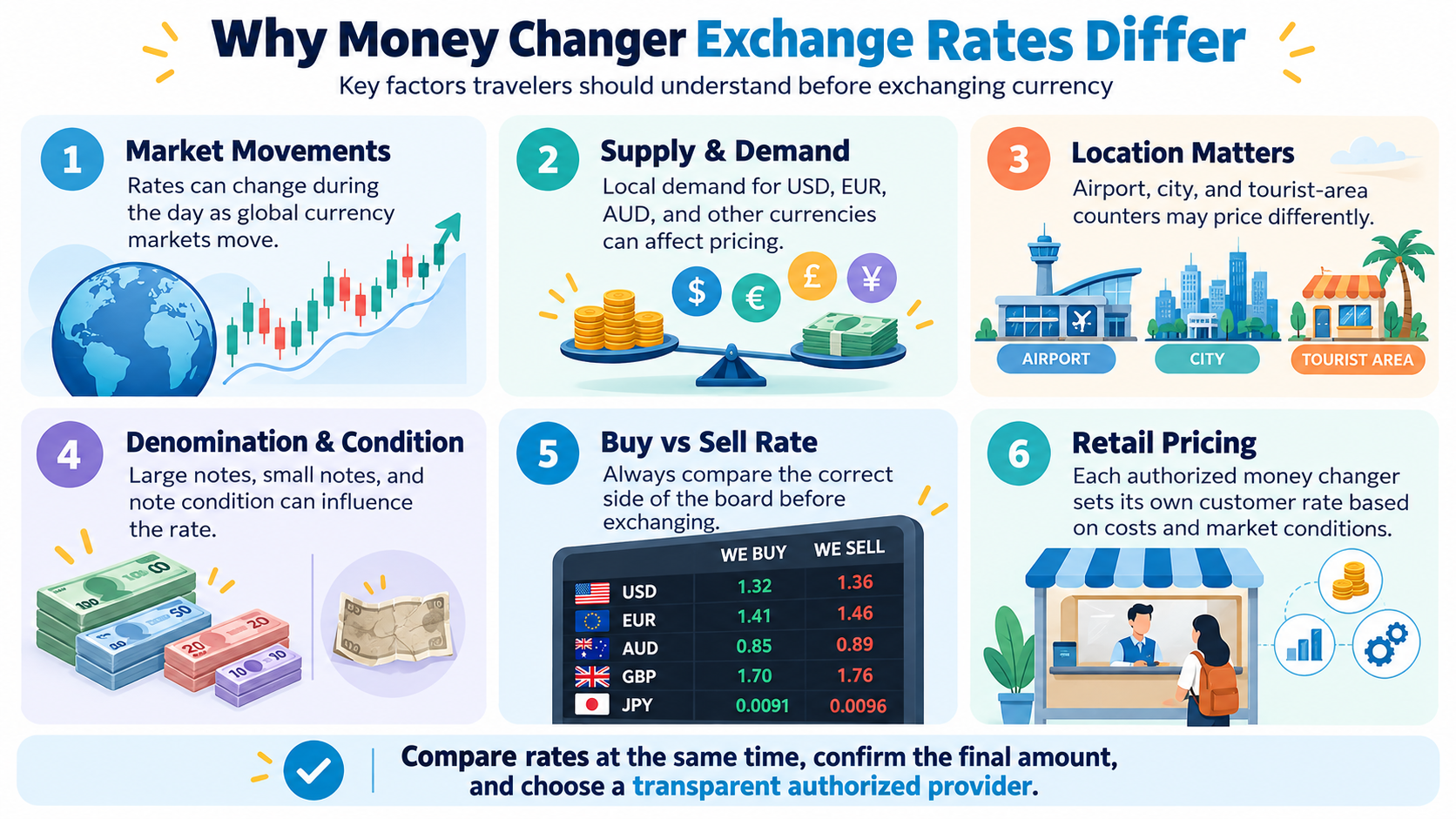
The answer is that retail exchange rates reflect more than the global currency market alone. Market movements, local supply and demand, location, banknote denomination, operating conditions, and internal pricing policies can all influence the final rate offered to customers.
Understanding these factors can help travelers compare exchange services more fairly and avoid confusion when different providers display different rates.
Money Changer Exchange Rates Can Move Throughout the Day
Foreign exchange markets are constantly changing.
A rate available in the morning may be different later in the day if market conditions move. Changes in major currencies can affect the reference prices used by banks, financial institutions, and money changers.
This means that Money Changer Exchange Rates should always be compared at roughly the same time. A rate seen earlier in the day may no longer reflect the current market.
Each Money Changer Sets Its Own Retail Rate
Authorized money changers do not simply copy one universal retail exchange rate.
In Indonesia, licensed non-bank foreign exchange businesses are required to establish Buy and Sell rates according to market mechanisms and maintain documented policies for setting those rates.
Some providers may also refer to market benchmarks or industry reference rates when assessing current conditions.
The final customer rate, however, is still part of the individual money changer’s pricing process.
This is why Money Changer Exchange Rates may differ even when providers are operating in the same city or handling the same currency.
Local Currency Supply and Demand Matter
Currency demand can vary significantly between locations.
A tourist area may receive large amounts of Australian dollars, while another location may see stronger demand for US dollars, euros, or other currencies.
Money changers need to manage the currencies they hold and the currencies customers want to buy.
Local currency availability is therefore another reason Money Changer Exchange Rates can differ from one location to another.
Location and Operating Conditions Can Make a Difference
Airport counters, shopping centers, tourist districts, and city branches operate in different environments.
Rent, staffing, opening hours, security, cash handling, and accessibility can vary between locations and may influence the overall cost of providing the service.
When comparing Money Changer Exchange Rates, travelers should therefore look at the actual rate being offered instead of assuming that one location type is always better.
An airport rate is not automatically worse, just as a city rate is not automatically better.
Banknote Denomination and Condition May Affect the Exchange
Not every banknote is treated in exactly the same way.
For some currencies, large and small denominations may have different levels of market demand. The physical condition or series of the banknote can also affect whether it can be accepted or processed.
Notes that are heavily damaged, torn, excessively marked, or difficult to circulate may require additional consideration.
Acceptance standards can vary depending on the currency and provider.
Why Online Currency Rates May Look Different
Another common question is why the rate shown on Google or an online currency converter does not exactly match the rate displayed by a money changer.
Online tools usually show a market reference or indicative rate. A money changer, however, is conducting an actual retail transaction involving physical foreign currency.
This means online reference rates and Money Changer Exchange Rates are not necessarily identical.
The retail rate may reflect market conditions, physical cash handling, currency availability, and the provider’s own pricing process.
Understand Buy and Sell Rates Before Comparing
Travelers should also make sure they are comparing the correct side of the rate board.
The Buy Rate applies when the money changer buys foreign currency from the customer.
The Sell Rate applies when the customer purchases foreign currency from the money changer.
Comparing a Buy Rate at one provider with a Sell Rate at another can create a misleading impression.
Key Takeaways
Money Changer Exchange Rates can legitimately differ because each transaction reflects a combination of market conditions, local currency availability, operating factors, banknote denomination, and provider pricing policies.
Travelers should compare the actual rate being offered, understand whether they are looking at a Buy or Sell rate, and confirm the final amount before completing the transaction.
Rather than looking only for the highest number on a rate board, it is also important to consider transparency, security, and whether the provider is authorized and professional.
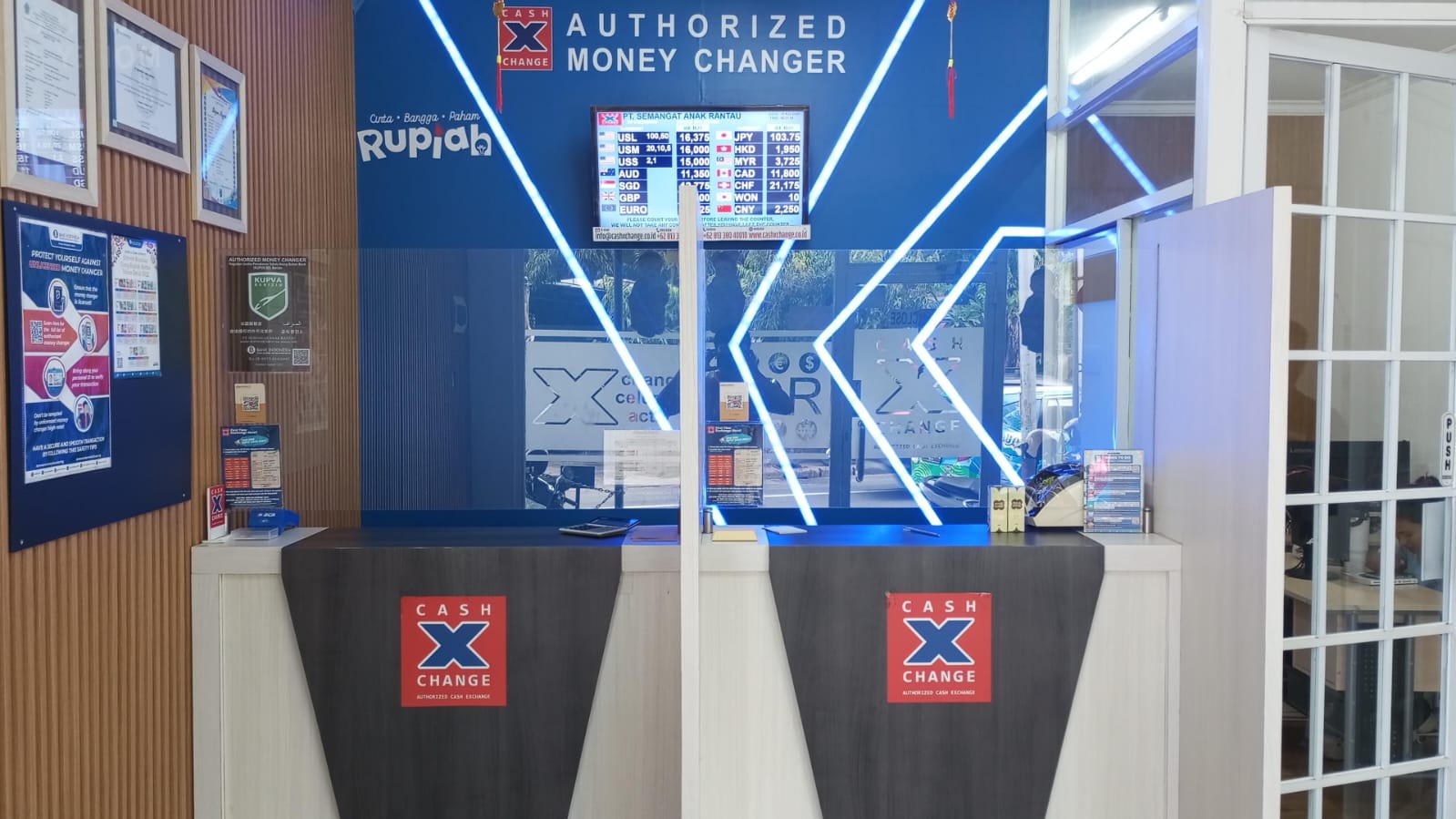
Cash X Change operates as an Authorized Money Changer, providing clearly communicated exchange rates and transparent foreign currency exchange transactions. Customers are encouraged to confirm the applicable rate and final amount before completing an exchange.